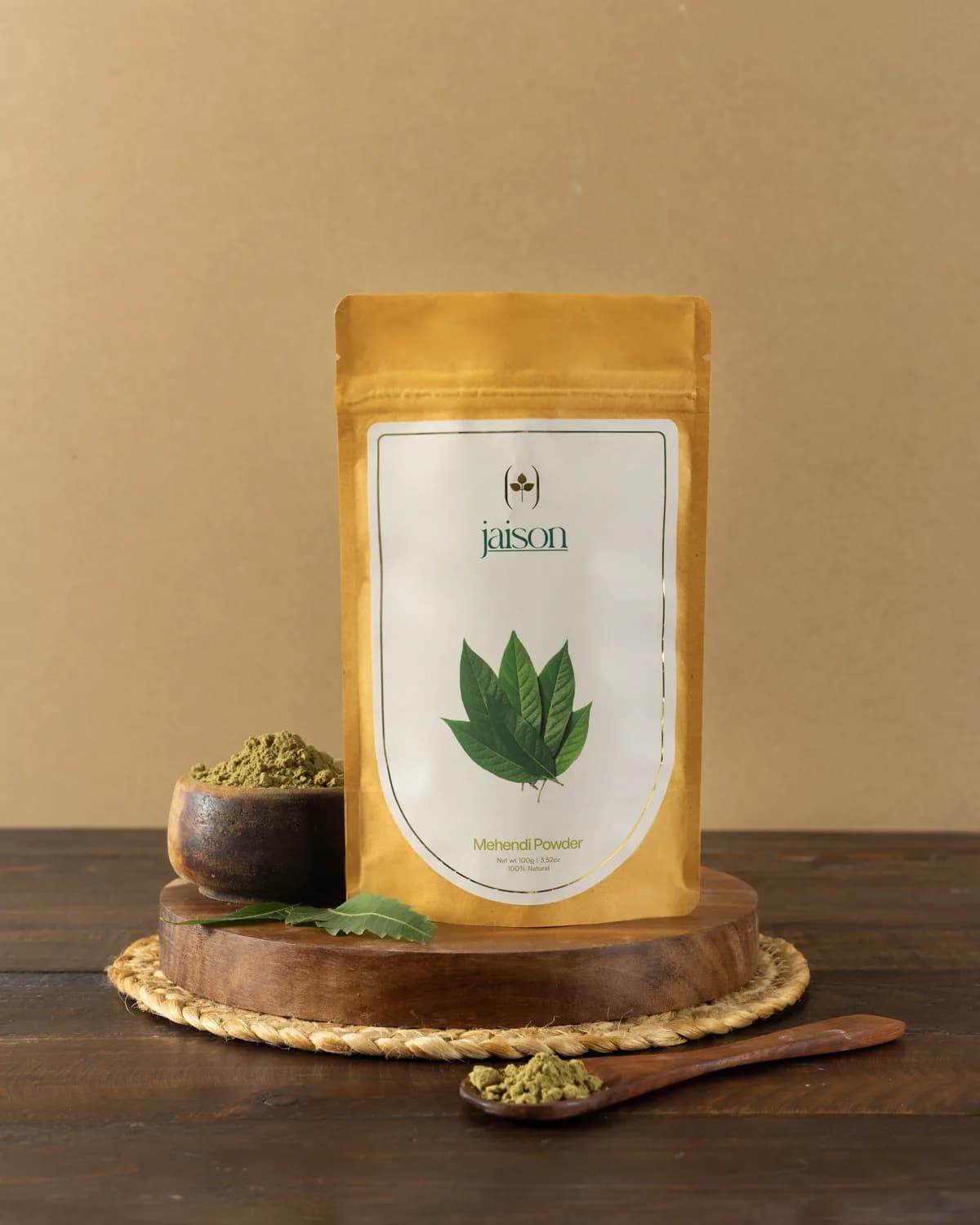
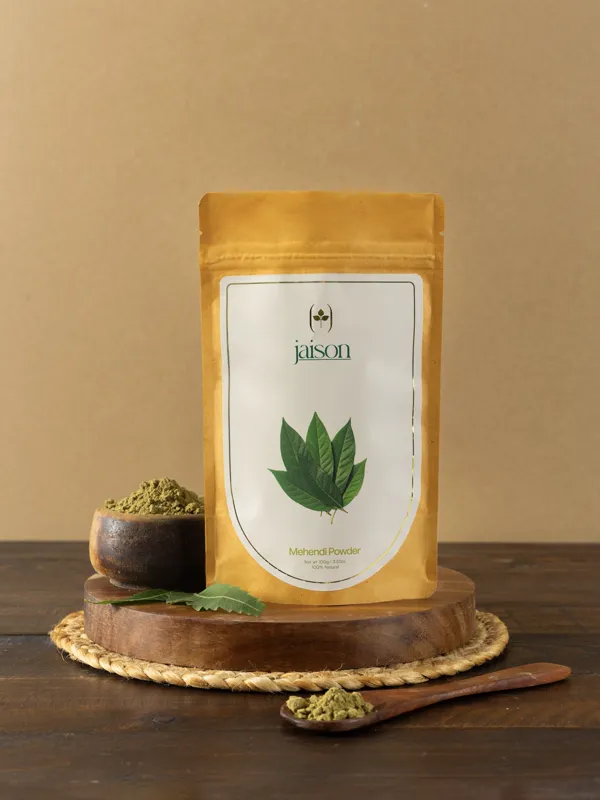
Mehendi (Lawsonia inermis) contains lawsone, a natural dye molecule that binds permanently to keratin in hair without opening the cuticle — the fundamental difference from chemical dyes that destroy internal hair structure. A 2015 study in the Journal of Cosmetics, Dermatological Sciences and Applications confirmed henna's protein-binding mechanism strengthens hair tensile strength by 15-20% compared to chemically dyed hair. Unlike chemical dyes where repeated applications cause cumulative damage, each mehendi application adds a protective coating that makes hair progressively stronger.
Key Takeaways
- ●Lawsone bonds to hair's keratin exterior rather than opening the cuticle, meaning mehendi strengthens hair while colouring — the opposite of chemical dye chemistry
- ●Mehendi has demonstrated antifungal activity against Malassezia globosa in vitro studies, explaining its traditional use for dandruff alongside colouring
- ●Colour develops over 48-72 hours as lawsone oxidises — never judge the final result before day 3
Mehendi — or henna, as it's known worldwide — is one of the oldest cosmetics in human history. Cleopatra used it. Indian brides have adorned their hands with it for millennia. But beyond its decorative use, mehendi is one of the most effective natural hair dyes and conditioners available. In a world where chemical hair colours cause damage, dryness, and allergic reactions, mehendi stands out as a safe, nourishing alternative that actually improves your hair while colouring it.
How Mehendi Colours Hair
The magic of mehendi lies in a molecule called lawsone (2-hydroxy-1,4-naphthoquinone). When mehendi paste is applied to hair, lawsone molecules bind to the keratin proteins in your hair, creating a permanent colour that doesn't wash out — it grows out.
Unlike chemical dyes that open up the hair cuticle and deposit artificial pigments inside (damaging the hair structure in the process), lawsone bonds to the outside of the hair shaft. This means mehendi adds colour while adding a protective coating that makes hair stronger and shinier.
The Chemistry of Lawsone: Why Mehendi Works
Lawsone (2-hydroxy-1,4-naphthoquinone) is the active dyeing molecule in mehendi leaves, present at approximately 1-2% concentration in dried leaf powder. It's a small, reactive molecule that participates in a Michael addition reaction with the amino groups of keratin proteins — the same proteins that form your hair.
This reaction is irreversible under normal conditions. The lawsone molecule covalently bonds to the keratin polypeptide chain and becomes structurally integrated. This is why mehendi colour grows out rather than washing out — it's part of the hair, not sitting on it.
The chemistry has two important downstream effects. First, the external coating of bonded lawsone molecules forms a physical barrier that reflects light more uniformly, producing the characteristic shine after mehendi treatments. Second, by filling surface irregularities in the hair cuticle (damage, porosity gaps, raised scales), the coating mechanically strengthens each strand against fracture under tension.
The lemon juice used during paste preparation plays a role here. Acidic conditions (pH 5-6) increase lawsone release from the plant cell matrix by breaking down plant cell walls. Mehendi mixed with plain water releases significantly less lawsone than mehendi mixed with lemon juice. This is why the overnight resting period combined with an acidic medium produces much more intense colour than fresh-mixed paste applied immediately.
Benefits of Mehendi for Hair
Natural, Chemical-Free Colour
Pure mehendi produces a rich, reddish-copper colour on hair. When combined with other natural ingredients, you can achieve shades ranging from deep brown to burgundy to jet black. All without a single synthetic chemical.
Deep Conditioning
Mehendi has a natural conditioning effect. After a mehendi treatment, your hair will feel thicker, smoother, and more manageable. The lawsone coating fills in gaps in the hair cuticle, making each strand stronger and more resistant to damage.
Covers Grey Hair Naturally
Mehendi is exceptionally good at covering grey hair. The colour payoff is actually better on grey hair because the lighter base allows the mehendi colour to show more vibrantly.
Reduces Dandruff
Mehendi has antifungal properties that help control the fungus causing dandruff. It also has a cooling effect on the scalp, reducing itchiness and irritation.
Strengthens Hair
The protein-binding properties of lawsone strengthen hair from the outside, reducing breakage, split ends, and damage from heat and pollution.
Colour Guide: Getting the Shade You Want
Copper-Red (Pure Mehendi)
Use mehendi powder mixed with water or tea only. This gives the classic reddish-copper colour.
Brown (Mehendi + Coffee)
- ●100g mehendi powder
- ●Strong black coffee (use as mixing liquid instead of water)
- ●2 tablespoons coffee powder
- ●This produces a warm brown shade
Dark Brown (Mehendi + Amla)
- ●100g mehendi powder
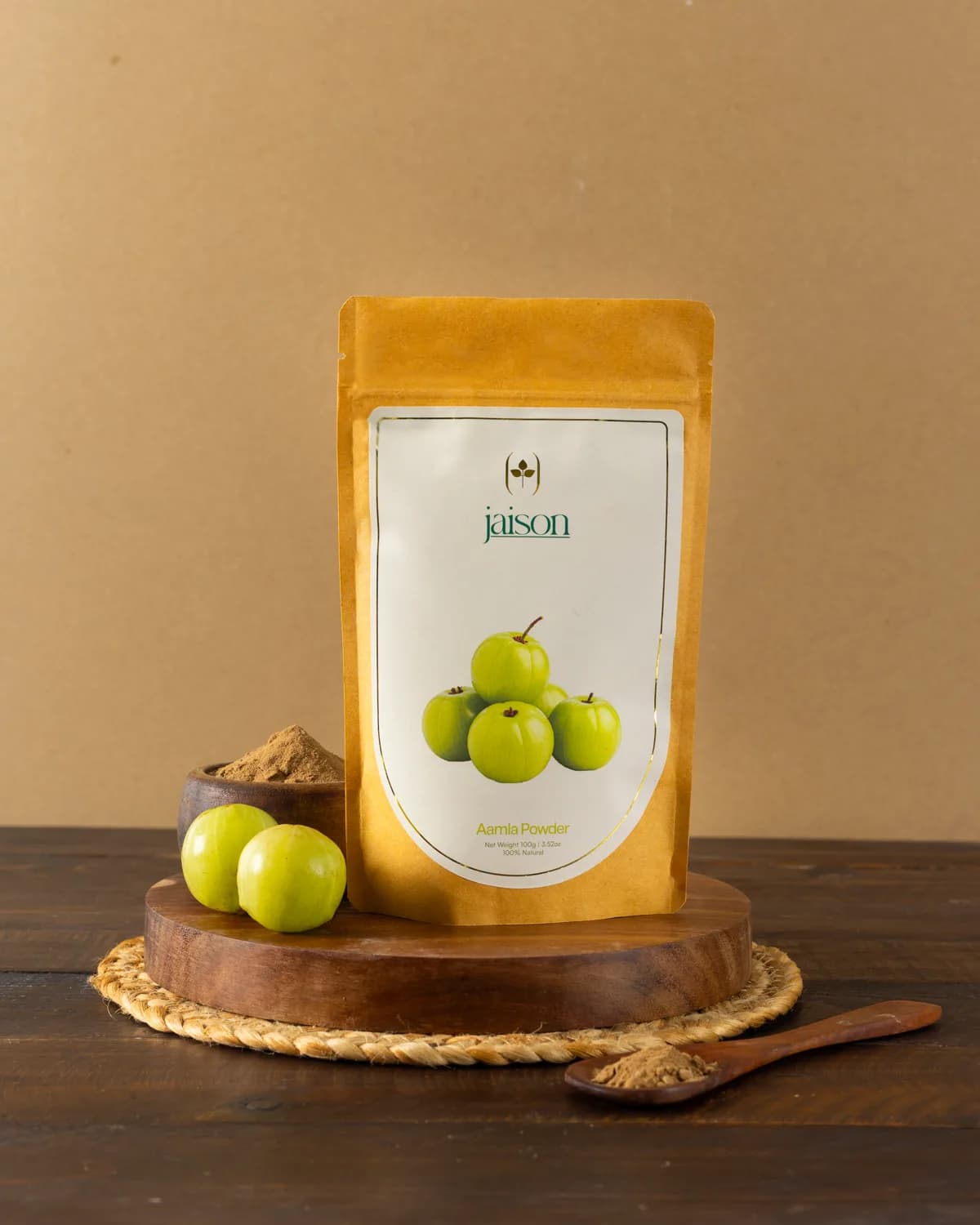
- ●2 tablespoons amla powder
- ●Mix with tea water
- ●Amla tones down the red and deepens the colour to dark brown
Burgundy (Mehendi + Beetroot)
- ●100g mehendi powder
- ●Mix with beetroot juice instead of water
- ●This produces a beautiful burgundy-wine shade
Black (Two-Step Process)
For jet black hair, a two-step process works best: 1. Apply pure mehendi, leave for 2 hours, rinse 2. Next day, apply a paste of indigo powder + water, leave for 1 hour, rinse This gives a natural, deep black colour.
Step-by-Step Application Guide
Preparation (Night Before)
1. Mix mehendi powder with your chosen liquid (water, tea, or coffee) 2. Add 1 tablespoon lemon juice (helps release more lawsone) 3. Cover and leave overnight at room temperature 4. The paste will darken — this means the dye is releasing
Application
1. Wear old clothes and gloves (mehendi stains!) 2. Apply coconut oil along your hairline and ears to prevent skin staining 3. Section your hair into 4-6 parts 4. Starting from the roots, apply mehendi generously to each section 5. Make sure every strand is covered — don't skimp 6. Pile hair on top of your head 7. Cover with a shower cap or plastic wrap
Processing Time
- ●For conditioning only: 1-2 hours
- ●For light colour: 2-3 hours
- ●For intense colour: 4-5 hours
- ●For maximum coverage of greys: 5-6 hours
Rinsing
1. Rinse with water only — no shampoo for 24-48 hours 2. The colour will deepen over the next 2-3 days as lawsone oxidises 3. Don't judge the final colour until day 3
Common Mistakes to Avoid
- ●Using hot water to mix — Heat destroys lawsone. Use room temperature or lukewarm liquid.
- ●Not letting the paste rest — Mehendi needs 6-12 hours for dye release. Applying fresh paste gives minimal colour.
- ●Washing too soon after — Shampooing within 24 hours strips the fresh colour. Wait at least 48 hours.
- ●Expecting instant results — The colour develops over 2-3 days. Be patient.
- ●Using "black henna" — If a product claims to be "black henna," it likely contains PPD (a chemical allergen). Pure henna is always greenish-brown powder that gives reddish tones.
How Often to Apply
- ●For colour maintenance: Every 3-4 weeks on roots, full length every 2-3 months
- ●For conditioning: Once a month
- ●For grey coverage: Every 2-3 weeks on roots as needed
Mehendi for Your Hair Type: Ayurvedic Approach
Ayurveda recommends mehendi differently depending on your dosha constitution, because the herb's cooling, astringent nature doesn't suit all types equally.
Vata hair (dry, brittle, thin, frizzy) benefits enormously from mehendi's conditioning properties but needs carrier modifications. Pure mehendi can be mildly drying for Vata types. Always mix mehendi with yoghurt or coconut milk as the liquid base instead of water. Adding 2 tablespoons of coconut oil to the paste before application prevents any dryness during the process. Limit treatments to once every 6-8 weeks — the coating effect can make very dry Vata hair feel stiff with more frequent use.
Pitta hair (fine, premature grey, oily scalp, heat-sensitive) is the ideal mehendi candidate. Mehendi's natural cooling energy directly balances Pitta's heat, which is the Ayurvedic explanation for its effectiveness against scalp inflammation and premature greying. Pitta types can apply mehendi as frequently as every 3-4 weeks and will see the best grey coverage results. Mixing with rose water amplifies the cooling effect.
Kapha hair (thick, heavy, oily, slow-growing) can use mehendi but should be cautious about the conditioning additions. Kapha hair doesn't need extra conditioning — it needs stimulation. Use mehendi mixed with strong black coffee (which is also stimulating in Ayurveda) for colour, and add 1 teaspoon of neem to address any scalp congestion. Avoid yoghurt or oil additions which can make already-heavy Kapha hair feel limp.
Mehendi Across Indian Seasons
Summer (April-June): Summer is the ideal time for mehendi treatments. The heat in the environment actually accelerates lawsone release and binding — you'll get deeper colour in summer with the same paste and processing time. Mehendi's cooling properties are also most welcome in summer heat. The scalp-cooling effect after a mehendi treatment is noticeable and lasts several hours.
Monsoon (July-September): Humidity during monsoon can extend the colour development time. Prepare paste slightly thicker than usual as the ambient moisture will thin it. Monsoon is also when hair is most prone to fungal scalp infections — mehendi's antifungal properties make this season particularly beneficial for monthly treatments. Dry hair thoroughly after rinsing since leaving damp hair in humidity can cause issues.
Winter (November-February): Winter presents the most challenging conditions for mehendi. Cold temperatures slow down lawsone release and binding significantly. To compensate: prepare paste with slightly warm (not hot) water, keep paste warm during the resting period by placing the bowl in warm water, and apply to hair in a warm room. Processing time may need to extend by 1-2 hours compared to summer. Use warming carrier additions like amla mixed in warm black tea.
Frequently Asked Questions About Mehendi
Will mehendi make my black hair turn red?
On very dark or black hair, the colour change from mehendi is subtle rather than dramatic. You'll see warm auburn and reddish-copper tones in sunlight that aren't visible indoors. The colour on dark hair looks more like a tint or gloss than a full colour change. This is actually desirable for many people — it adds dimension without looking unnatural. If you want visible, dramatic colour change on dark hair, you need to pre-lighten, which defeats the purpose of going natural.
Can I apply chemical hair dye after using mehendi?
Not safely, and this is the most important warning for henna users considering switching back to chemical colour. Lawsone's irreversible protein bonds create an unpredictable substrate for chemical dye. When developers and oxidative dyes interact with lawsone-coated hair, the results can be uneven, orange-toned, or in rare cases green-tinted. The interaction is especially unpredictable because it depends on how much lawsone is present. You need to wait for the mehendi-treated hair to fully grow out (typically 12-18 months for shoulder-length hair) before safely applying chemical colour.
Is mehendi safe during pregnancy?
Traditional Ayurvedic practice considers topical mehendi on hair safe during pregnancy as the systemic absorption from scalp application is minimal. However, lawsone in high concentrations has been flagged in some literature regarding G6PD deficiency — a genetic condition that's uncommon but worth checking for if you have South Asian, African, or Mediterranean ancestry. Most mainstream dermatological guidance considers pure henna (not "black henna" containing PPD) safe for topical use during pregnancy. Consult your obstetrician if you have specific concerns.
How do I know if a mehendi product is pure?
Pure mehendi powder is always greenish-brown, never black. Pure mehendi gives reddish-copper tones, never jet black directly. It should smell earthy and slightly plant-like, not chemical. Check the ingredient list — it should say only "Lawsonia inermis" or "henna powder." If it claims to produce black colour in one step or contains "natural black" ingredients like PPD (p-phenylenediamine), it's not pure henna. PPD is a documented allergen that causes severe reactions in a significant percentage of users.
Does mehendi work on hair that's already been bleached or highlighted?
Yes, and the results can be stunning — lighter base hair actually takes mehendi colour more intensely and shows it more vividly. Bleached or highlighted hair appears more orange-red rather than copper, because there's less natural dark pigment to modulate the colour. The conditioning benefit is also more pronounced on bleached hair since bleaching causes significant cuticle damage that mehendi's lawsone coating helps repair. If you want to transition from bleached to natural-looking hair using mehendi, this is an excellent strategy.
The Natural Choice for Beautiful Hair
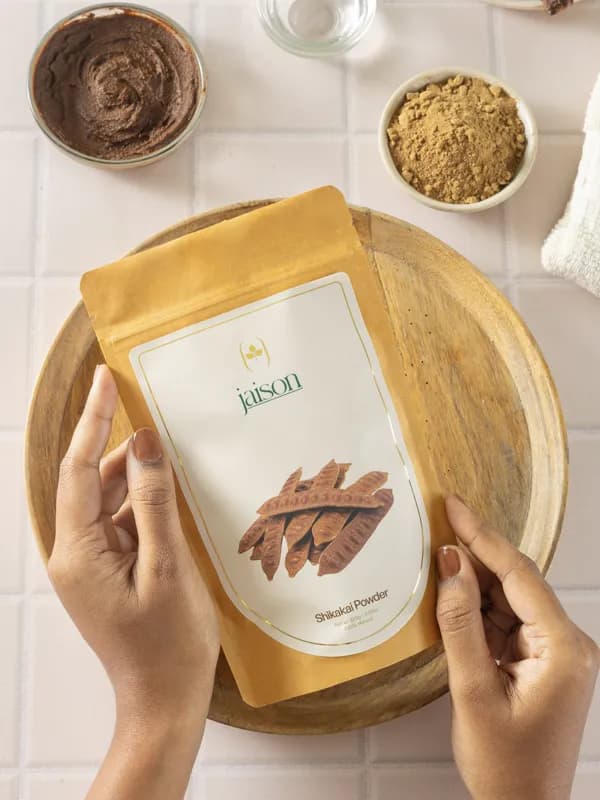
Mehendi is proof that the best beauty solutions are often the oldest ones. While chemical dyes damage your hair with every application, mehendi strengthens it. While chemical dyes fade and need frequent touch-ups, mehendi builds upon itself, getting richer with each application. It's not just a hair dye — it's a complete hair treatment that colours, conditions, and protects in one step. Complete the ritual: wash your hair with the Shikakai, Reetha & Amla natural method before application, and follow with weekly bhringraj oil treatments between colour sessions for stronger, faster-growing hair. Embrace this ancient beauty secret and enjoy naturally beautiful, chemical-free hair colour.
Shop the Ingredients
The herbs from this article, sourced and processed for your ritual.