Most Ayurvedic herbs in a skincare or haircare cabinet do one job well. Nagarmotha does two — and both are backed by the same traditional property: it's a cooling, astringent rhizome that purifies whatever surface it touches, scalp or skin.
Key Takeaways
- ●Nagarmotha (Cyperus rotundus) is used in Ayurveda for both scalp buildup/dandruff and skin dullness/dark spots
- ●On the scalp, its astringent action helps clear flaky buildup and balance oil production
- ●On skin, the same astringent property is traditionally used to tighten pores and fade dark spots
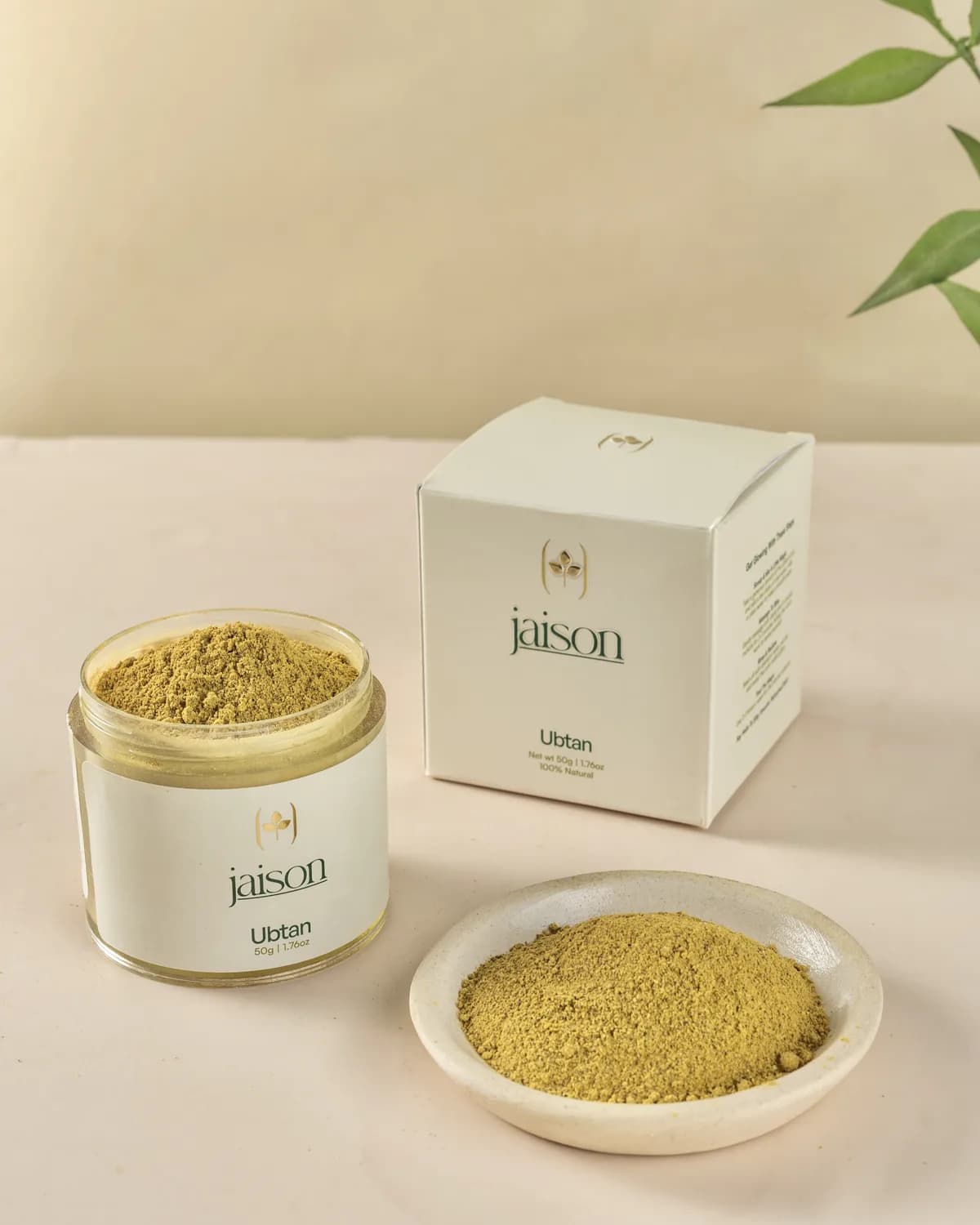
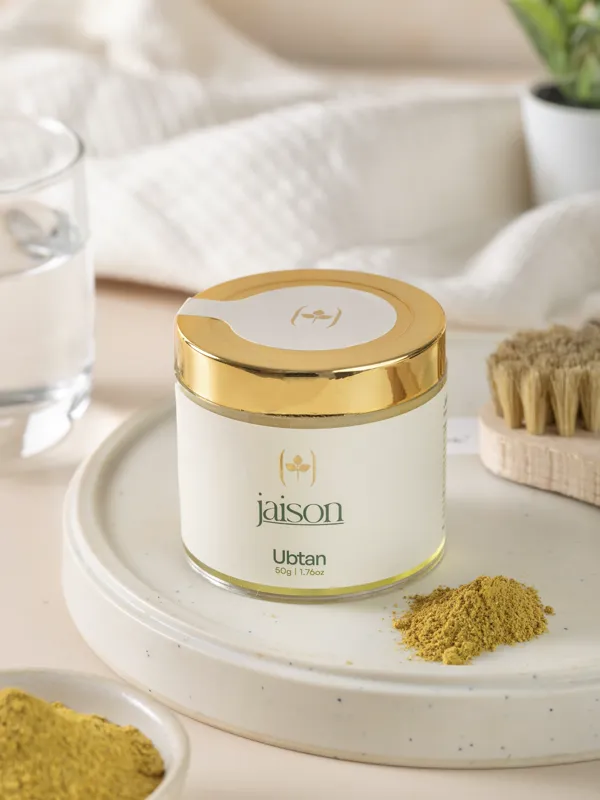
- ●It's also one of the 17 herbs in Jaison's Ubtan blend, where it plays the same purifying role
What Is Nagarmotha?
Nagarmotha is the ground rhizome (underground stem) of Cyperus rotundus, a grass-like plant that grows wild across India. In Ayurveda it's classified as a cooling, astringent (kashaya) herb — the same qualities that make it useful on both scalp and skin, since both respond well to gentle, oil-balancing astringency. It's a less commonly stocked herb than shikakai or amla, which is part of why it's often searched for specifically — not every brand carries it, but it's been a working part of Ayurvedic scalp and skin routines for generations.
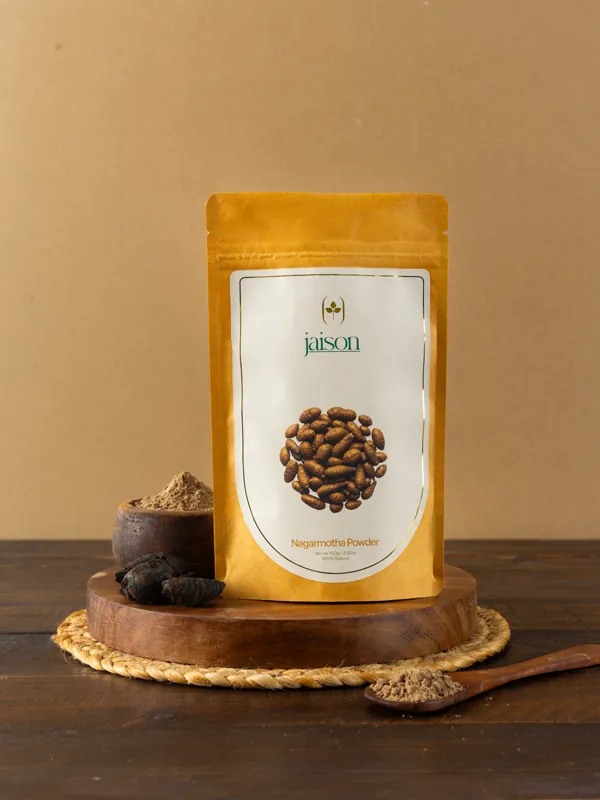
Jaison's Nagarmotha Powder is 100% pure, sun-dried Cyperus rotundus rhizome — nothing else added. It's also one of the 17 herbs in our Ubtan blend, where it works alongside Kachora and Bakuchi for the same brightening, purifying effect.
Benefits of Nagarmotha
For the scalp:
Clears dandruff and flaky buildup — Nagarmotha's astringent action helps lift flakes and product buildup from the scalp, leaving it cleaner and less prone to irritation.
Balances scalp oil — By helping regulate excess oil production, it creates a less hospitable environment for the flaking and itching that come with an overly oily or overly dry scalp.
Strengthens roots — A cleaner, better-balanced scalp is a better base for hair growth. Used regularly, it supports the kind of scalp environment that reduces breakage at the root.
For the skin:
Fades dark spots — Nagarmotha's astringent property is traditionally used to help fade dark spots and patchy pigmentation with consistent use.
Brightens and tightens — It helps tighten the appearance of pores and bring a fresher, more even look to the complexion.
Cools and soothes — Ayurveda classifies Nagarmotha as a cooling herb, traditionally used to calm skin that feels irritated or overheated.
How to Use Nagarmotha
For Skin: Brightening Face Pack
- ●2 tablespoons Nagarmotha powder
- ●Rose water, enough to form a smooth paste
- ●Apply to the face, let it dry, then rinse off
For Skin: Dark Spot Spot-Treatment
- ●1 tablespoon Nagarmotha powder
- ●Coconut oil, enough to form a paste
- ●Apply directly to dark spots, leave for 20-30 minutes, then wash gently
For Hair: Scalp-Clarifying Paste
- ●2-3 tablespoons Nagarmotha powder
- ●Water, enough to form a smooth paste
- ●Apply to the scalp, focusing on areas with buildup or flaking, and massage gently
- ●Leave on for 20-30 minutes, then rinse thoroughly
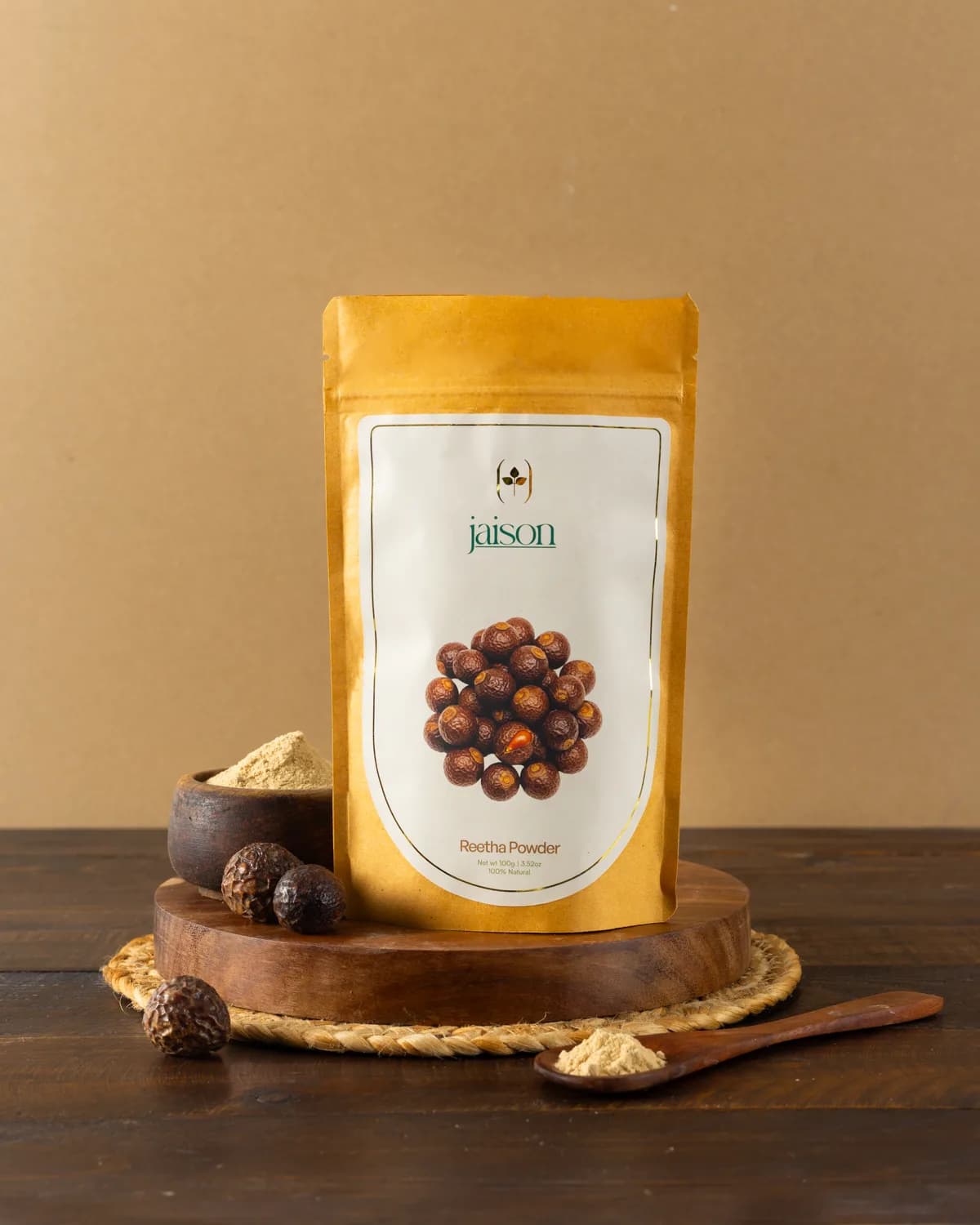
For a more complete scalp wash, combine Nagarmotha with reetha powder for extra cleansing, or with amla powder if your hair needs more nourishment alongside the scalp treatment.
How Often Should You Use Nagarmotha?
For the scalp, 1-2 times a week is enough to address buildup without over-drying. For the face, 2 times a week works well for most skin types — start with once a week if your skin is on the sensitive side, and watch how it responds before increasing frequency.
Tips for Best Results
- ●Always patch test before first use, on both skin and scalp
- ●Use a fresh paste each time rather than storing a mixed batch
- ●Don't let the face pack dry completely and crack — rinse once it's just set, to avoid over-tightening sensitive skin
- ●Pair it with the right partner herb — reetha or shikakai for scalp cleansing, amla for scalp nourishment, rose water or coconut oil for skin, depending on what you're treating
Nagarmotha by Dosha
Vata skin/scalp (dry, flaky) should use Nagarmotha less frequently — once a week — and always pair it with a moisturising follow-up: coconut oil on skin, or an amla rinse after a scalp treatment, so the astringent action doesn't tip an already-dry scalp or complexion further toward dryness.
Pitta skin/scalp (sensitive, prone to redness, oily at the roots) tends to respond especially well to Nagarmotha's cooling property. Use rose water as the mixing liquid rather than anything warming, and keep sessions to 15-20 minutes.
Kapha skin/scalp (oily, thick, prone to congestion and heavier buildup) can use Nagarmotha more often — up to twice weekly on the scalp — since the oil-balancing, buildup-clearing action suits this type particularly well.
Frequently Asked Questions About Nagarmotha
Can I use Nagarmotha on my face and scalp on the same day?
Yes, there's no conflict — just treat them as two separate applications (don't mix the face-pack batch and the scalp-paste batch together), since the ratios and mix-in ingredients differ.
How long before I see results on dark spots?
Consistent, traditional use is usually measured in weeks rather than days — most people pair a 2x-weekly routine with sun protection, since any brightening herb works better alongside, not instead of, daily SPF.
Is Nagarmotha the same as nut grass or purple nutsedge?
Yes — Cyperus rotundus is also known as nut grass or purple nutsedge in English. In Ayurveda it's used specifically as a rhizome powder for skin and scalp, distinct from its reputation elsewhere as a common lawn weed.
Can Nagarmotha replace my regular hair wash?
No — Nagarmotha is a scalp treatment, not a full cleanser the way reetha is. Use it as a targeted scalp treatment alongside your regular natural hair wash, not in place of it.
Does Nagarmotha have a strong smell?
It has a mild, earthy, slightly aromatic scent typical of a dried rhizome powder — noticeably less sharp than neem, and it fades once rinsed off.
Why Choose Jaison's Nagarmotha Powder?
Nagarmotha isn't an ingredient every brand stocks on its own — it's more commonly hidden away as one line in someone else's blend. Jaison sells it pure: 100% Cyperus rotundus rhizome, sun-dried and finely ground, with nothing else added. It's the same herb that gives our Ubtan its purifying edge, now available on its own for anyone who wants to use it as a targeted scalp or skin treatment. One rare rhizome, two real uses — exactly as Ayurveda intended it.
Shop the Ingredients
The herbs from this article, sourced and processed for your ritual.